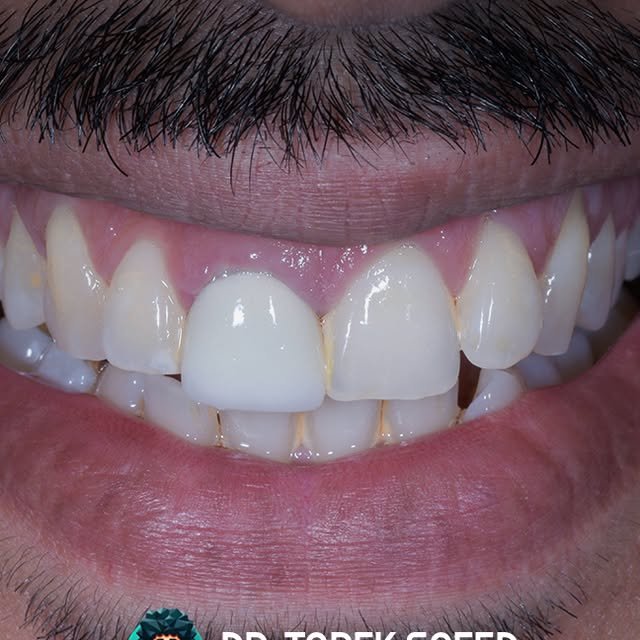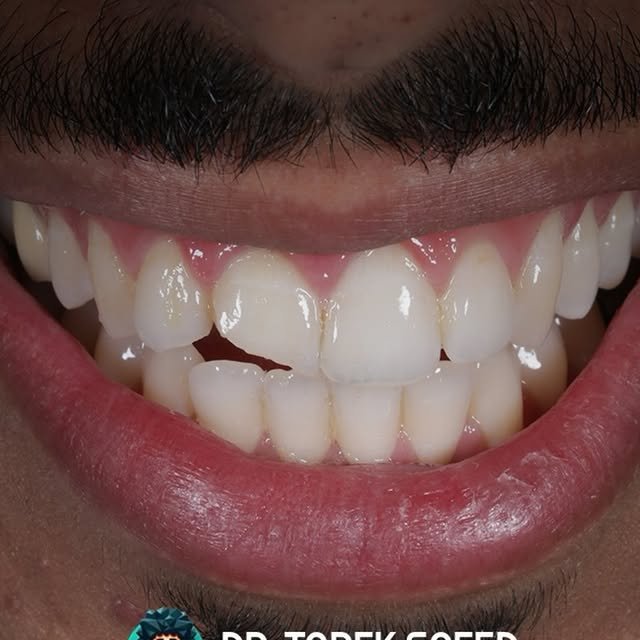
Veneers got Your Teeth harmed?
Want to know the medical truth your dentist hides from you?
What do you really know about dental veneers?
You may already know quite a bit about them, or perhaps you have simply heard about them from friends. But there is much more to veneers than what we usually hear about.
In this article, we’ll take a closer look at this modern dental treatment and discover what really happens in the dental clinic. Are veneers truly the magic solution for achieving your dream smile, or could they have hidden risks for the health and structure of your natural teeth in the long run?
Let’s take a closer look.
In the past, when a tooth had minor damage, a partial fracture, or a cosmetic concern, the traditional and often only option dentists had was a full crown, commonly known as a dental cap.
This approach required the dentist to remove and reshape a significant amount of healthy tooth structure to make room for the crown. While effective, removing so much natural tooth structure could weaken the tooth and potentially increase the risk of future nerve related problems.
Today, advances in modern dentistry have changed this approach considerably.
Dentists and researchers have increasingly embraced the philosophy of minimally invasive dentistry—an approach focused on preserving as much healthy natural tooth structure as possible while avoiding unnecessary removal or damage.
This has opened the door to more conservative treatment options, including:
Partial ceramic restorations, such as inlays and onlays, which can precisely restore damaged or fractured areas of back teeth without covering the entire tooth with a full crown.
Thin ceramic veneers, which are custom-made restorations placed on the front surface of the teeth to improve the appearance of the smile while preserving as much natural tooth structure as possible.
2. Types of Dental Veneers: How Do We Choose the Right One?
Before visiting your dentist, it helps to understand that there are two main types of cosmetic veneers commonly used today: composite veneers and ceramic (porcelain) veneers.
First: Composite Veneers (Direct Cosmetic Bonding)
Composite veneers are built and shaped directly on the patient’s teeth, usually during a single appointment, using advanced tooth-colored resin materials.
They are considered a relatively conservative option because they require very little removal or reshaping of the natural tooth structure.
They can look natural and attractive, and they are generally less expensive than ceramic veneers. However, they also have some limitations.
Compared with ceramic veneers, composite veneers are less translucent and glossy, more likely to stain from coffee, tea, and smoking, and more susceptible to chipping or fracture. They typically require repair or replacement every 5–7 years.
Second: Ceramic Veneers (Premium Porcelain)
Unlike composite veneers, ceramic veneers are fabricated with a high degree of precision in specialized dental laboratories or using advanced digital-design technologies.
They are created based on detailed measurements of the patient’s teeth and are then bonded to the teeth during a dedicated appointment.
Ceramic veneers generally require more preparation and reshaping of the enamel than composite veneers to create enough space for the restoration.
Their main advantage is their exceptional translucency, which closely resembles the optical properties of natural teeth. Their color is also highly resistant to staining and yellowing over time.
Ceramic veneers are highly durable and resistant to both staining and fracture, with a typical lifespan of around 10–15 years or more.
However, because they involve higher-quality materials, laboratory work, and advanced digital technologies, they are naturally more expensive.
So, How Does the Dentist Decide Which Option Is Right for You?
The decision is not random. It depends on the condition of your teeth, your aesthetic needs, and the extent of the problem.
For minor concerns such as mild surface discoloration, very small chips along the edges of the teeth, or slight spaces between teeth, the dentist may choose composite veneers.
For more significant concerns, such as deep discoloration or severe tooth wear, ceramic veneers may offer a more comprehensive solution.
But Can You Really Get Veneers “Without Shaving Down Your Teeth”?
This is one of the biggest questions people ask before getting veneers:
Do I really need to reshape my healthy natural teeth to achieve my dream smile?
Modern dentistry is constantly looking for the right balance between achieving the aesthetic result patients want and preserving as much of their natural tooth structure as possible.
The goal is to minimize unnecessary tooth preparation while also reducing the risk of future complications.
This has led to two main approaches to porcelain veneers:
No-Preparation Porcelain Veneers (Prepless Veneers)
These veneers are extremely thin and can be compared to contact lenses in terms of their thinness and translucency.
They are designed to be bonded directly to the front surface of the tooth without removing or reshaping the original enamel.
Recent scientific studies have reported high short- to medium-term success rates for these veneers, reaching up to 97.4%, provided that they are properly designed and bonded directly to enamel.
One of their biggest advantages is that they preserve the original tooth structure.
More importantly, because the deeper layer of the tooth, known as dentin, is not exposed, patients may be less likely to experience sensitivity to hot or cold foods and drinks after placement.
However, prepless veneers are not suitable for every patient or every situation.
They are generally not recommended when the teeth have severe, dark discoloration that an extremely thin veneer cannot adequately mask.
They are also not suitable for significantly crooked, crowded, or structurally compromised teeth when substantial changes to the tooth’s position or shape are required.
Conventional Porcelain Veneers (Requiring Preparation)
Conventional porcelain veneers require an initial preparation step in which a very thin layer of the outer enamel is removed or reshaped, usually around 0.5–1 mm.
This creates enough space for the veneer to be placed at an appropriate thickness and allows it to blend naturally with the contours of the neighboring teeth.
The main advantage of this approach is its versatility.
Conventional veneers can be an excellent solution