The Massacre Your Dentist Is Committing Against Your Teeth!
Have you ever noticed your teeth “thinning” or shortening over time, as if they are silently melting in your mirror,
to the point where you hesitate to smile in front of others? And does a chill run down your spine just imagining a dentist grabbing a dental burr to carve down and destroy your completely healthy tooth structure under the banner of traditional “Hollywood Smile” makeovers?
The good news is that this outdated nightmare is gone for good. Even better—and hidden from you by conventional clinics—is that today, your teeth don’t need to be touched at all to look and feel better than ever!
The Silent Shock of Tooth Wear: How Does the Story Begin?
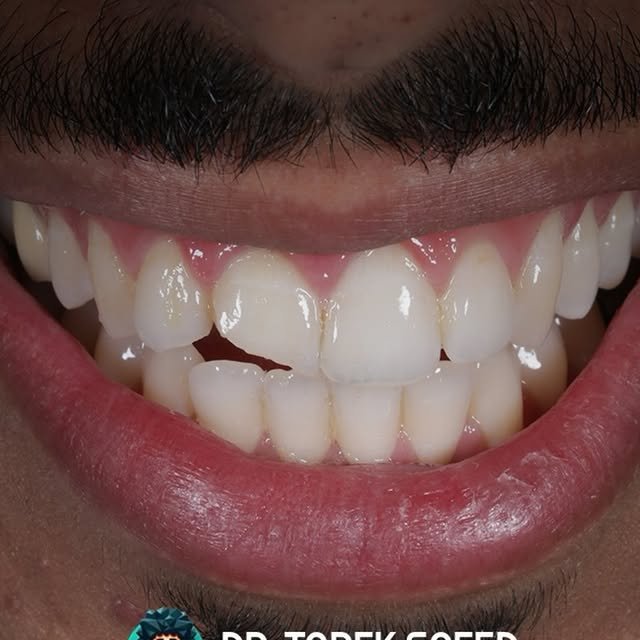
Tooth wear doesn’t happen overnight. It begins as a silent, gradual loss of the protective outer layers (enamel and dentin) caused by constant friction or continuous exposure to acids. While mild wear can be a natural part of aging, it sometimes escalates into an aggressive condition that threatens oral health. Over time, this progression shatters your daily life through sharp, agonizing sensitivity when sipping a cold drink or hot beverage, a noticeable change in the vertical distance between your jaws that strains facial muscles, and a distinct shortening of the front teeth that robs you of your joyful expression and self-confidence.
When a person reaches this stage, a whirlwind of psychological and social anxiety begins. They stop laughing freely, avoid group photos, and turn eating and drinking into stressful events fraught with the fear of sudden pain. The loss here isn’t just aesthetic; teeth lose their fundamental mechanical ability to chew food and bite into fruits. This directly impacts digestive health and overall bodily comfort, turning the need for treatment into an urgent, non-negotiable priority.
Smile Engineering: Why Chaos Cannot Be Fixed Randomly
When teeth reach this advanced stage, trying to fix them randomly is like attempting to renovate an old house without securing its foundation. Full-mouth rehabilitation is not a superficial makeover; it is a precise engineering system driven by integrated specialties that connect tooth position, gum health, and the distribution of chewing forces during jaw closure. Because of this, randomized dentistry is dead. True treatment begins with a comprehensive, phased roadmap that ensures total control over early issues and grants you complete peace of mind from day one.
Rehabilitating an entire mouth is much like restoring a rare masterpiece; you cannot simply paint the surface or add details without studying the internal structure. A skilled clinician views the mouth as a unified, integrated system rather than isolated teeth. They must analyze right and left jaw movements, the path of occlusion, and the vertical dimension between the jaws that ensures facial muscle and temporomandibular joint (TMJ) comfort. Any oversight of these precise architectural details leads to the rapid failure and frequent fracture of new restorations. This is precisely why advanced digital planning and clinical studies save patients from this vicious cycle, ensuring treatments last for years without complications.
The Crossroads: Direct Fillings vs. Restorations
When seeking radical solutions to halt tissue loss and shield the original tooth nerve from trauma, we find ourselves at two main crossroads in the dental office:
Traditional or Indirect Methods: Such as full or partial crowns fabricated in a laboratory, which offer high durability but inherently require extensive cutting and shaving of the tooth structure to anchor properly.
Direct and Conservative Methods: Relying on composite resin fillings bonded with advanced adhesives without any extra reduction of the natural tooth structure. This approach champions lower costs, protects what remains of the tooth structure, and serves as a sustainable option that can be maintained or modified in the future without altering the core tooth size.
Choosing between these two paths depends entirely on the degree of wear and the condition of the original tooth. When tooth structure is relatively sound and wear is in its early stages, conservative methods act as the first line of defense, preserving nerve health and saving the patient from excessive costs and pain. However, when teeth suffer deeper structural damage, turning to more robust options becomes mandatory—provided the core principle remains minimizing reduction as much as possible and utilizing smart materials that harmonize seamlessly with surrounding living tissues without triggering destructive pressure or chronic gum inflammation.
A Tour Through Material Science: Which Should You Choose?
Looking closely at today’s dental materials reveals diverse options with distinct, precise roles:
Direct Composite: An aesthetic filling applied directly to the tooth chairside by the dentist. Annual failure rates range from 0% to 6.2%, while complication rates like minor chipping or discoloration hover between 1% and 4.2%. It is a wonderful, conservative choice requiring no reduction, though it has a shorter lifespan than ceramics and is more prone to fracture in posterior teeth, requiring periodic maintenance with a replacement rate ranging from 0.4% to 3.97%.
Indirect Restorations (Lab-Crafted Ceramics and Nano-Ceramics): These have demonstrated astonishing long-term stability and success with drastically lower failure and fracture rates compared to composite. At the forefront is pure ceramic, which has proven its overwhelming superiority as the strongest and longest-lasting option ever, recording an annual failure rate of just 0.04% with exceptionally low complications between 0.2% and 1.1%.
It is also helpful to know that minor issues (like superficial scratching or secondary failure) can be easily fixed without replacing anything, whereas primary structural failure that destroys the restoration entirely is what necessitates a replacement.
The world of dental materials is undergoing an endless technical revolution, moving far beyond traditional substances that stain over time or succumb to dark beverages and hot foods. Modern ceramics and nano-ceramics can replicate the finest microscopic details of a natural tooth, from incisal edge translucency to color gradation and light reflection. This evolution grants both clinician and patient immense flexibility in selecting materials tailored to every region of the mouth. The anterior zone demands exquisite aesthetics and optical translucency, while the posterior zone requires immense mechanical strength to withstand daily chewing pressure without early fracturing or wear.
The Therapeutic Revolution: Say Goodbye to Grinding with “One-Step No-Prep”
In the past, the traditional crown was the sole guillotine forced upon your teeth, enclosing them entirely after aggressive grinding from every angle. Today, the philosophy of Minimally Invasive Dentistry has taken center stage, spearheaded by a revolutionary technique known as “One-Step No-Prep”.
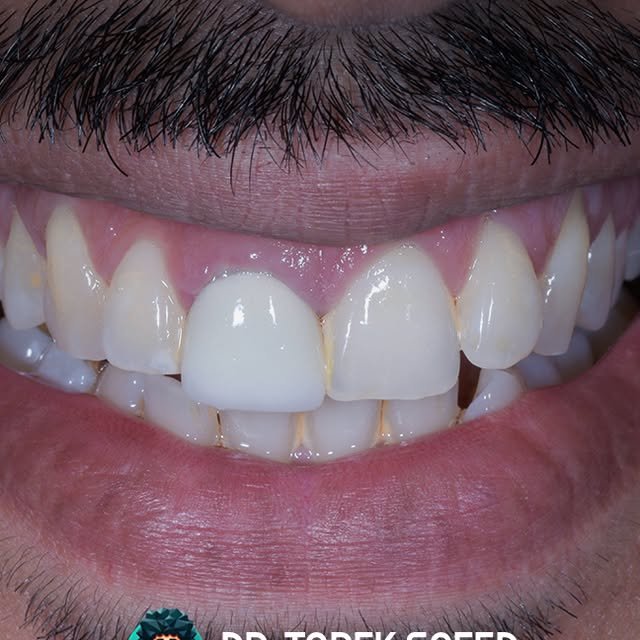
This magical technique relies on ultra-advanced materials called Polymer Infiltrated Ceramic Networks (PICN), digitally designed to micron-level precision and bonded directly onto worn teeth using ultra-strong adhesives—without drilling or carving a single molecule of the original tooth body. Complete nerve protection, a final farewell to pain, and the full preservation of your natural tooth structure.
This technique completely transforms a patient’s psychological outlook on the dental clinic. Visits are no longer associated with the fear of deep anesthesia injections and the terrifying sounds of drilling tools smashing bone and teeth. Bonding ultra-thin, highly durable restorations over worn teeth restores their strength and aesthetic appeal with pinpoint precision. It represents the pinnacle of modern evolution, putting patient health and oral comfort first, liberating them from sacrificing healthy natural tissues gifted to them, and securing a healthy future and a lifelong smile without regression or painful complications.
The Language of Numbers: What Do the Last 9 Years of Research Say?
This is not merely a passing trend in the cosmetics world. Large-scale clinical studies tracking hundreds of restorations over 9 years have proven staggering efficiency:
Phenomenal Survival Rate: Overall success and retention rates for these restorations reached 98.4% (100% for anterior teeth and 96.7% for posterior teeth).
Absolute Color Stability: Hybrid ceramics demonstrated a unique ability to retain their gloss and shade without stubborn staining, combined with multi-color options that deliver an indistinguishable, natural appearance matching real teeth.
When we talk about a 9-year follow-up period, we are looking at documented scientific facts, not fleeting lab experiments. The near-perfect survival rate of anterior restorations and stellar posterior outcomes provide complete reassurance to any patient hesitant to take the treatment leap. These high figures reflect massive advancements in modern adhesive qualities that microscopically interlock with tooth structure to form a solid, inseparable unit, completely erasing fears of sudden restoration dislodgment while eating or speaking publicly.
Behind the Scenes: How to Guarantee a Flawless Result
To walk away from this experience with the smile of a lifetime, precise technical details must be executed by an expert clinician:
Calculated Thickness for Posterior Teeth: To withstand massive chewing forces, the minimum thickness of posterior restorations must not be less than 0.6 mm in occlusal contact areas.
Smart Material Selection: Utilizing multi-colored hybrid ceramic blocks in the anterior zone to ensure a vibrant, lifelike optical gradient.
Digital Planning: Implementing intraoral scanning and digital smile design to guarantee restoration harmony with jaw movements with near-zero error margins.
These fine details mark the core difference between a clinic offering random treatments and one fiercely competing to deliver the highest global quality standards. When a dentist utilizes 3D digital scanning instead of uncomfortable traditional molds, human error in taking impressions is entirely eliminated. By adhering to safe minimum thicknesses in the back, they protect restorations from fracturing under heavy bite pressure. It is meticulous clinical craftsmanship blending engineering precision with artistic beauty, delivering a flawless end result that grants you absolute confidence and total comfort every time you smile or savor your favorite meal.
Your Next Step Toward a Sustainable Smile
Despite the rising prevalence of tooth wear, it can be controlled and halted in moderate-to-severe cases requiring restoration. Here lies the importance of professional guidance guiding the patient toward a periodic maintenance plan, coupled with absolute caution against neglect that could lead to the loss of even more precious enamel.
Your natural teeth are an irreplaceable asset, and transforming your smile no longer requires painful sacrifices or health-threatening grinding. Sustainable solutions are right in your hands, and all it takes is a simple decision to step onto the path of lifelong comfort and confidence. Investing in your dental health today is a direct investment in your quality of life, mental well-being, and social and professional success.
Why postpone the smile of your dreams any longer? Contact us today and book your consultation with our specialist to evaluate your case digitally, and let us craft a brand-new future worthy of your expression!